CIPC Registration Mistakes to Avoid
- Johan De Wet
- Sep 28, 2025
- 3 min read
Quick Answer: The most common CIPC registration mistakes include submitting incorrect documents, reserving confusing or duplicate company names, missing director details, and forgetting annual returns after registration. These errors can cause delays, extra costs, or even deregistration.
Why Avoiding Mistakes Matters
Registering your company with the Companies and Intellectual Property Commission (CIPC) is the first step to building a compliant business in South Africa. Small errors during registration may seem minor, but can:
Delay your registration approval.
Cause rejection and re-application fees.
Affect your ability to open a bank account.
Lead to non-compliance fines later.
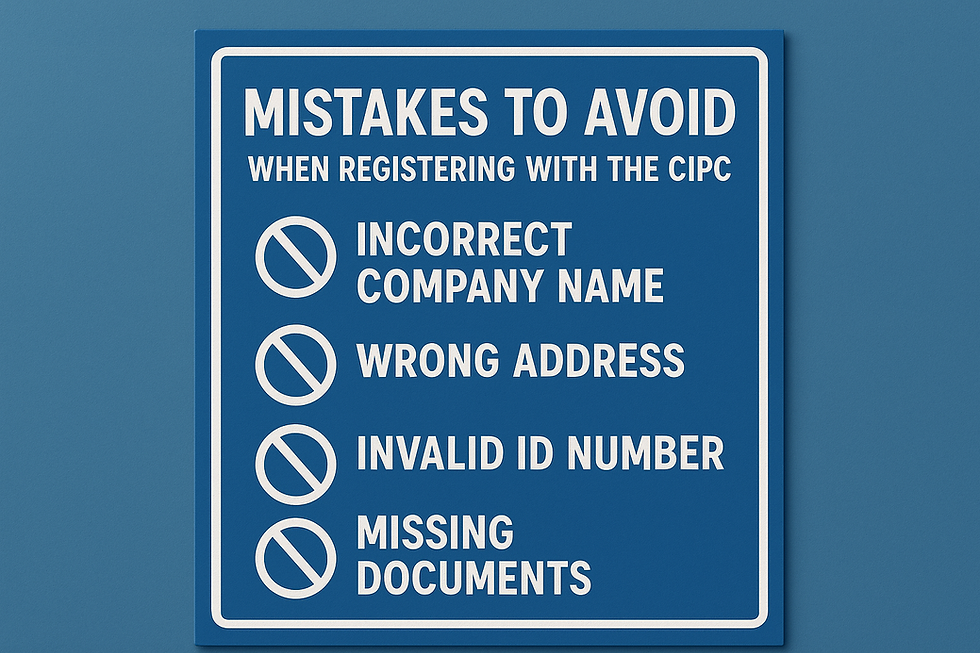
Mistake 1: Using a Duplicate or Rejected Name
Many entrepreneurs waste time by submitting names that are already taken. CIPC rejects names that are:
Too similar to existing registered companies.
Misleading (e.g., “Government,” “Bank,” or “University”).
Offensive or legally restricted.
Tip: Always do a quick CIPC and Google search before applying to improve approval chances.
Mistake 2: Incorrect or Missing Documents
CIPC requires specific documents to confirm your identity and address. Mistakes include:
Submitting uncertified copies of IDs/passports.
Using outdated proof of address (older than 3 months).
Uploading blurry or incomplete scans.
These errors will cause your application to bounce back, costing you time.
Mistake 3: Wrong Director Information
Company directors must be listed accurately. Common mistakes include:
Leaving out one or more directors.
Using incorrect ID/passport numbers.
Mismatched names between documents and application.
CIPC cross-checks this data, so even a spelling mistake can delay registration.
Mistake 4: Not Understanding Shareholding Setup
When registering a Private Company (Pty Ltd), you must decide on shareholding. Mistakes include:
Not allocating shares to each director/shareholder.
Leaving shareholding blank.
Not drafting a basic shareholders’ agreement (can cause disputes later).
💡 Tip: Even if you’re the only owner, allocate 100% of shares to yourself to avoid confusion.
Mistake 5: Forgetting Annual Returns After Registration
Many new business owners think registration is a “once-off.” But CIPC requires annual return filings to keep your company active. Mistakes include:
Not filing annual returns at all → company may be deregistered.
Filing late → penalties and interest.
Annual returns start from R100 per year (depending on turnover).
Mistake 6: Ignoring Tax and Compliance After Registration
Registering with CIPC does not automatically make you tax-compliant. Mistakes include:
Not registering with SARS for income tax, VAT, or PAYE.
Skipping UIF and COIDA registrations if you employ staff.
Compliance gaps can cause problems when applying for tenders, loans, or contracts.
FAQs About CIPC Registration Mistakes
1. What happens if my name is rejected by CIPC?
You must reapply with new name options and pay the R50 fee again.
2. Can I fix a mistake after submitting my application?
Yes, but it usually requires re-uploading corrected documents, which delays approval.
3. What if I forget to file annual returns?
CIPC will charge penalties and may eventually deregister your company.
4. Do foreigners make the same mistakes?
Yes. Most issues involve incorrect passports, expired visas, or missing proof of address.
Final Thoughts
CIPC registration mistakes are easy to make but just as easy to avoid if you prepare correctly. The biggest errors are incorrect documents, poor name choices, and neglecting compliance after registration.
If you want to avoid delays, using a professional service like Smartbook ensures your registration is done right the first time — and that you stay compliant long after registration.
Comments